
 REQUEST INVITE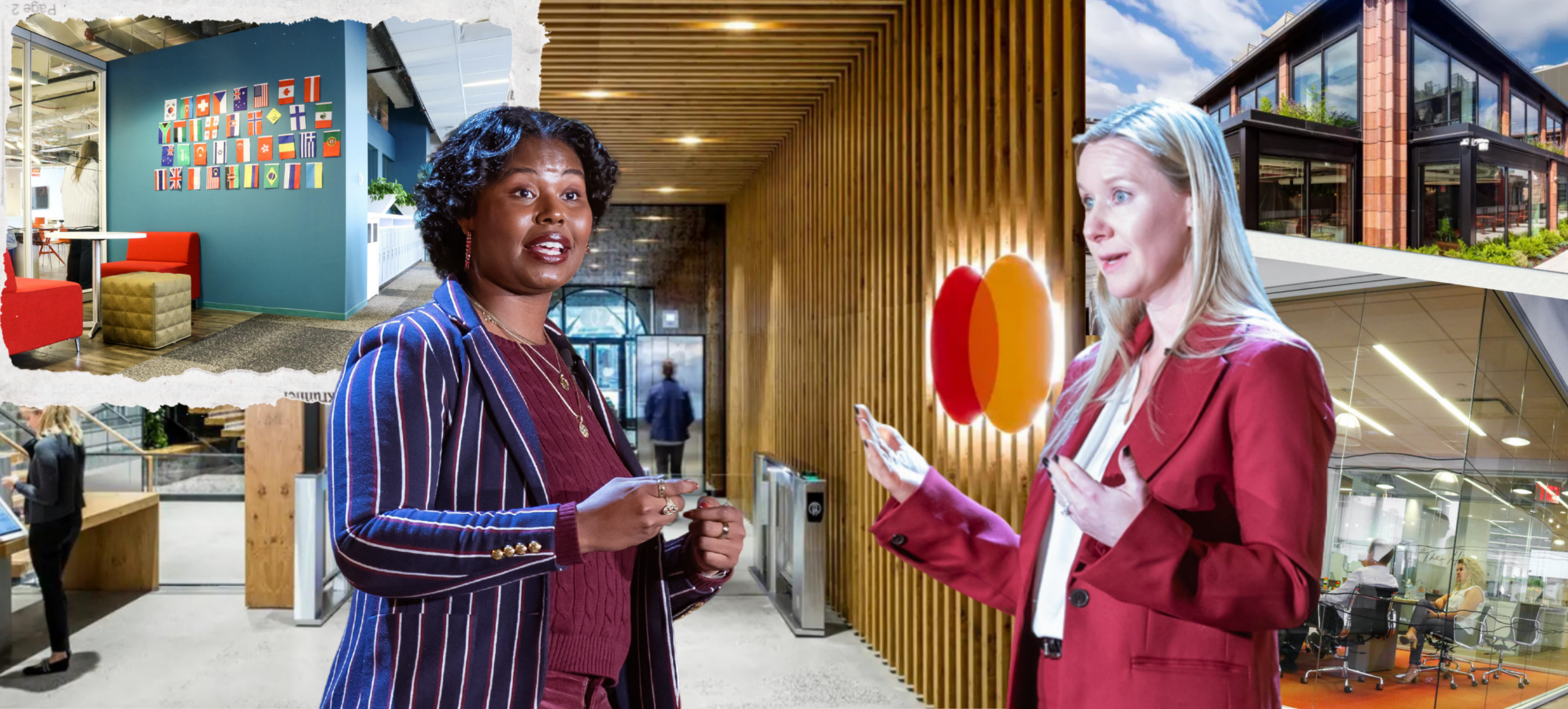
At WorkSpaces, two Mastercard leaders offered a ground-level look at what it actually takes to optimize a workplace that isn't working. Jian Bland, VP of the NYC Tech Hub and Workplace Experience, and Lauren Stockhausen from Employee Digital Experience, have spent the last few years rebuilding how their New York office functions from the inside out. Their presentation was refreshingly practical: less vision statement, more what we tried, what the data said, and what we did about it.
Start with the Experience, Not the Space
Mastercard's philosophy is simple to say and harder to execute: experience comes first. Not the square footage, not the utilization rate, not the cost per seat. The experience of the person showing up, fighting through the New York City subway, and walking in expecting something worth the effort.
"If you fought through the subway and made your way into the office through all the chaos of the city," Bland said, "we wanted to make sure that by the time you got there, the experience was truly worth it."
The physical structure they've built to support that is organized around hubs, neighborhoods, and block captains. Hubs are the large anchor locations. Within them, neighborhoods are team-designated spaces with enough flexibility for teams to shape how they actually work. Block captains are employees who serve as workplace ambassadors, feeding information back up and carrying updates back down. It's a continuous loop, not a top-down announcement system.
The Stakeholder Problem Nobody Talks About
Getting anything done at scale inside a large organization requires navigating a gap that Bland named directly: the influencers and the decision makers are not always the same people.
Bland reports into HR. Stockhausen reports into technology. That difference could have made their collaboration a bureaucratic dead end. Instead, it became an asset.
When both are aligned on the same goals and the same metrics, they can reach different parts of the organization simultaneously and arrive at the same message from two directions.
Their partnership started organically: both were independently identifying the same friction points for the same stakeholders. "We were working in tandem instead of in partnership," Stockhausen said. As soon as that shifted, momentum accelerated. The lesson for anyone running a similar initiative: find your counterpart in the organization who shares your audience, even if they don't share your reporting line.
When the Data Tells Two Different Stories
One of the more instructive examples from the session was about conference rooms, and it illustrated something worth paying attention to. Qualitative feedback from employees was loud and consistent: rooms are always booked, we can't find space, we need more. The utilization data told a different story: rooms weren't actually being used at anything close to full capacity.
Both things were true. The problem wasn't too few rooms. It was too many ghost bookings. Recurring meetings where half the attendees were remote. Executives booking full-day blocks and forgetting to cancel. The perceived scarcity was real, even if the actual scarcity wasn't.
The fix was already sitting in their existing technology stack. A check-in prompt, integrated into Microsoft Teams and the Crestron panels outside each room, releases the space automatically if nobody confirms they need it. Small adjustment, immediate impact. "It takes the onus off the employee," Bland said, "and puts it on the technology."
The Dynamic Seating Pilot
The most significant thing Mastercard tackled was a more fundamental mismatch: 1,200 employees based in the New York office and roughly 600 workstations. Post-pandemic, as people came back in earnest, the result was predictable. People found seats, but rarely near their teams. High-traffic days were chaotic. Low-traffic days felt empty. The experience was uneven and, for a lot of people, not worth the trip.
Their solution was a dynamic seating pilot built around an algorithm. The process started with mapping who was on which team, then validating which other teams they needed to be near to do their best work. The algorithm took that input and generated specific team schedules, distributing attendance more evenly across the week. Those schedules went back to the teams for feedback and iteration before anything was finalized.
What came out of that process was more than a seating plan. It surfaced how teams actually work together across functions, not just within them. Engineering teams flagging that they needed to be near design during a specific product build. Sales teams requesting overlap with product ahead of a joint pitch. The scheduling exercise became an organizational listening exercise.
The results after the pilot: 86% of employees on the pilot floor were able to sit with their team, up from 53% on non-pilot floors. More than 76% said it improved their overall office experience. The program is now scaling to other locations across North America and internationally.
The Part That Made It Stick
The numbers are useful, but Stockhausen pointed to something harder to measure as the real reason it worked: employees were part of building it.
"By ingesting their feedback into the process and including them in the conversation along the way," she said, "it was a very organic change management process." People weren't handed a new system and told to adapt. They were asked what was missing, what would help, what their team actually needed. When the pilot launched, the post-launch feedback was more reliable because the people giving it had contributed to what they were evaluating.
It's a small but meaningful distinction. The workplace changes that land tend to be the ones where employees feel like collaborators rather than test subjects. Getting there requires the feedback loops, the block captains, the cross-functional stakeholder alignment, all the scaffolding that Bland and Stockhausen described. None of it is especially complicated. Most of it just requires deciding that the experience is worth the effort of getting right.
Watch the full talk below 👇
Want to be in the room for conversations like this?
Request an invite to WorkSpaces →

Posted by
Join us at WorkSpaces!
The retreat for corporate real estate and workplace innovators.
Oct 4-6, 2026 | Santa Barbara, CA

-1.png)
-3.png)
-3.png)


Comments